Hot water is not something most households in Boulder think about until it has run out. Whether you’re replacing an outdated unit or constructing a new home, selecting the appropriate water heater represents a considerable investment. In addition to the associated upfront costs, your choice of new water heater (tank or tankless) will significantly influence the following: energy efficiency, monthly utility costs, performance, and long-term value.
If you require Water Heater Installation Service Boulder, by reviewing the differences between tank and tankless water heaters, you will be able to make a well-informed decision. From the various types of water heaters to their energy consumption, size, installation process, and price, each type of water heater will have its unique advantages or disadvantages depending upon how you utilize hot water in your home.
In this article, you will learn how each type of water heater operates and the factors that must be taken into consideration if you live in Boulder and need water heater installation in Boulder.
What Are Tank-Style Water Heaters?
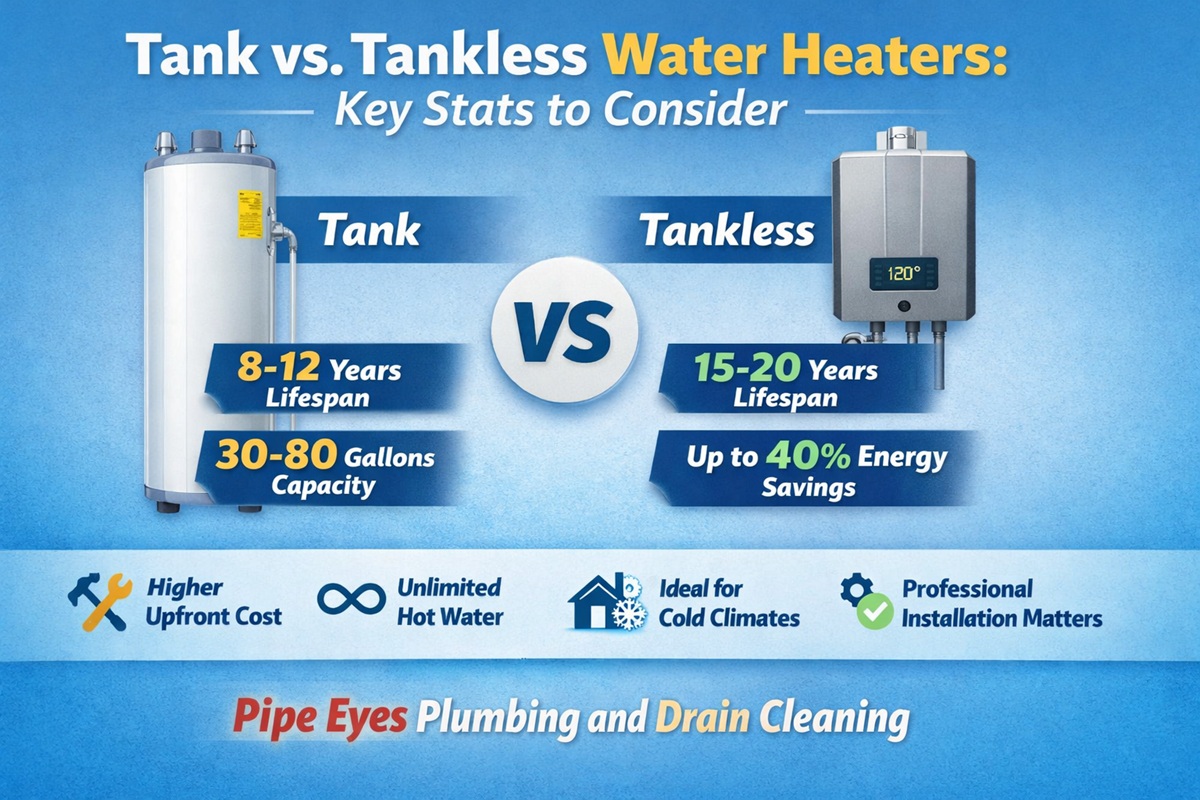
Tank-style water heaters are the type of water heater that most residential homes have. These types of units consist of a large insulated tank or container that holds heated water; the size of the tank can vary between 30 and 80 gallons. Every time you turn on the tap to get hot water from a tank, it fills back up with cold water and reheats for the next time you need hot water throughout the day.
Because you heat water and store it before you dispense it from tank systems, tank water heaters deliver consistent temperature and pressure for a short time. However, once the hot water tank runs out of hot water, you’ll have to wait for the water to be reheated again in the tank.
Advantages of Tank Water Heaters
Generally, tank systems are less expensive at the time of installation and are easier to install than other kinds of water heaters. As such, when you’re looking for a straightforward Water Heater Installation Service Boulder, purchasing a tank system will serve you well and save you money in most cases.
For the most part, tank systems work with a great majority of the current plumbing in homes in Boulder, providing homeowners with a simple replacement opportunity for old water heater units. Furthermore, tank systems are typically easier to care for, maintain, and repair than the more sophisticated tankless water heaters.
Disadvantages of Tank Systems
The greatest disadvantage of the tank system is the limited amount of available hot water at any given time. For example, if a large family uses a lot of hot water during peak times, they may not have enough hot water to meet their demands. Additionally, because tank systems continuously heat water, they incur costs associated with heating water while it is being stored for use; therefore, tank systems experience “standby energy loss.”
In addition, if a tank water heater does not receive regular flushing (to remove sediment), the unit’s ability to operate efficiently or last a long time may be diminished.
Basics of Tankless Water Heaters
Tankless water heaters are sometimes called on-demand systems because they only use power to heat water when it is flowing through them. Unlike tank systems, which store hot water, tankless systems utilize high-capacity heating devices, either high-powered burners (typically gas, compressed natural gas, or oil) or electric elements, to heat water as it flows through the heater.
How Tankless Water Heaters Operate
When you open the hot water faucet, cold water flows through the water heater’s heat exchanger, which immediately increases the temperature of the water, therefore delivering a continuous flow of hot water without needing a storage tank. Tankless Water Heater Installation provides homeowners with a modern solution for their needs in Water Heater Installation Near Me.
As such, here are several benefits to installing a Tankless Water Heater.
The primary benefit of a Tankless Water Heater is that there is no limit on the amount of hot water available, provided you have sized the unit appropriately, say, for example, assuming two people take back-to-back showers in the same time frame, you won’t run out of hot water.
A second benefit of Tankless Water Heaters is that they are an efficient way to save energy and eliminate standby heat loss, which is why almost every property owner in Boulder appreciates lower utility bills and the fact that Tankless Water Heaters typically last much longer than traditional tanks.
Additionally, because Tankless Water Heaters are installed on the wall, they take up very little room in your utility room or basement, thereby freeing up space in those areas.
However, Tankless Water Heaters are more expensive than traditional tanks and may require electrical or gas line upgrades before installation. So, if you live in Boulder, hiring a professional Water Heater Installation Company in Boulder to properly install your Tankless Water Heater will be paramount.
Determine the Size & Type of Water Heater You Need
The size of your household and the amount of hot water your household uses per day are two important aspects of Water Heater Installation. For example, a large family that requires large amounts of hot water due to high daily usage would benefit most from a Tankless Water Heater, as it is capable of providing an endless supply of hot water. Conversely, smaller families with lower hot water needs might find that traditional tank systems are sufficient for their needs and are more cost-effective.
A qualified Water Heater Installation Service in Boulder will use peak demand calculations to determine the appropriate capacity of a new water heater to meet the hot water needs of a household.
If your goal is to increase the energy efficiency of your water heater, a Tankless Water Heater may better meet your needs; however, there are many high-efficiency traditional tanks available as well.
A qualified technician will provide you with a complete description of the installation requirements of any type of water heater you choose (including venting and electrical modifications).
FAQs About Tank & Tankless Water Heaters
- How do tankless and traditional water heaters compare when it comes to energy efficiency?
Tankless systems are generally more energy-efficient because they heat water only when you need it (known as “on demand”) and don’t experience any round-the-clock losses associated with keeping warm water stored in a tank, called standby heat loss. On the other hand, high-efficiency (HE) tank systems can also perform well. To determine which type of system (tank or tankless) will meet your energy efficiency goals, contact a professional water heater installation service in Boulder for a consultation. - How much time can I expect my tank or tankless water heater to stay in good working order?
Generally, traditional tanks have a life expectancy of 8 to 12 years, while tankless systems can function for 15 to 20 years (at least) if they receive proper maintenance. Receiving professional water heater installation service in Boulder and having your system serviced regularly will help extend the life of your water heater. - Will I have to spend more money to install a tankless water heater?
Generally speaking, yes. Tankless systems will incur higher installation costs than tanks because they typically require additional venting or electrical work to be completed prior to installing your new water heater. However, the energy savings and longer life of the unit may offset the higher installation costs over time. - Can I change from a tank-style water heater to a tankless unit?
Yes, you can convert to a tankless water heater, but the installation may require plumbing and/or electrical modifications, which should be evaluated by a qualified technician. The technician will provide you with a detailed estimate before proceeding with the conversion of your existing heater. - How do I determine which size water heater is best for my home?
Sizing a water heater is a function of total demand for hot water from your family, the number of bathrooms in your home, the total number of appliances that utilize hot water, and the times during the day when the most hot water will be consumed. A professional water heater installation service near you can give you the necessary calculations to ensure you do not experience shortages or inefficiencies from your new heater.
Conclusion: Choosing the Right Water Heater Depends On Your Needs
Performance needs, individual budgets, energy efficiency goals, and available space will determine whether you go with either a tank or a tankless water heater. Tank systems are the most economical option, while tankless systems provide an unlimited supply of hot water and longer-term energy savings.
To ensure that the proper sizing and installation are completed for your new water heater, be sure to contact a professional water heater installation service in Boulder prior to upgrading or replacing your outdated water heater. By making an informed decision about your new water heater, you will help preserve the comfort level in your home and the integrity of your plumbing system.
Pipe Eyes Plumbing and Drain Cleaning is proud to be the leading provider of professional water heater installation services in Boulder and the surrounding communities. All installation work is focused on safety and long-term durability. The experience of Pipe Eyes’ team members ensures that each installation meets or exceeds local building codes and customer expectations.
Whether you decide on a tank or a tankless system, you can rest assured that Pipe Eyes Plumbing and Drain Cleaning will provide you with a high-quality, dependable, and long-lasting water heating system. Contact us today to schedule an installation service.